What Is a Notice Period? Rules, Buyout and How to Shorten It

Jatin Kashyap
Growth Lead, Acrapath
What is a notice period? Learn how it works in India, the UK, UAE and US, how notice period buyout is calculated, and 6 ways to shorten your notice.
General information, not legal advice. Rules checked November 2026. Your employment contract and local law decide your exact notice terms.
Key Takeaways
A notice period is the time between resigning (or being told you're let go) and your last working day, usually set in your employment contract.
In India, 30, 60 or 90 days is common in private jobs, depending on company policy and seniority.
A notice period buyout means paying (or having your new employer pay) for the days you don't serve, so you can leave early.
Rules differ by country: the UK sets statutory minimums, the UAE sets a 30–90 day range, and US jobs are usually at-will with two weeks as a custom.
You can often shorten your notice by negotiating, using leave balance, or a buyout. Get any agreement in writing.
You've accepted a great offer. The new company wants you in 30 days. Then you check your contract: 90 days' notice. Suddenly the dream switch looks complicated.
Understanding your notice period before you resign saves a lot of stress. This guide explains what it means, how it works in India and other countries, how notice period buyout works and practical ways to shorten it without burning bridges.
What Is a Notice Period?
A notice period is the time you must keep working after you formally resign, or after your employer tells you your job is ending, before your last working day. It gives the employer time to hand over your work and hire a replacement, and gives you time to wrap up properly. The length is usually written in your offer letter or employment contract.
Notice periods often depend on your stage:
During probation: often shorter, such as 7–30 days.
After confirmation: longer, commonly 30–90 days in India.
Senior roles: may be 90 days or more.
Notice Period Rules by Country
There is no single global rule. Here is a simple overview of the four markets jobseekers ask about most.
Country | How notice is set | Typical length |
|---|---|---|
India | Mainly the employment contract, company policy and applicable standing orders | 30–90 days in private jobs |
UK | Contract, with statutory minimums | At least 1 week from employees after 1 month's work, unless the contract says more |
UAE | Contract within the limits of the UAE Labour Law | Between 30 and 90 days |
US | Most jobs are at-will | Two weeks is customary, not usually legally required |
For the UK, GOV.UK's guidance on handing in your notice explains the statutory minimums. For the UAE, see the Ministry of Human Resources and Emiratisation. Always check your own contract first, since it often sets a longer period than the legal minimum.
What Is a Notice Period Buyout?
A notice period buyout lets you leave before your notice ends by compensating your employer for the days you don't serve. The amount is usually your salary for those remaining days, often calculated on basic or gross pay depending on company policy.
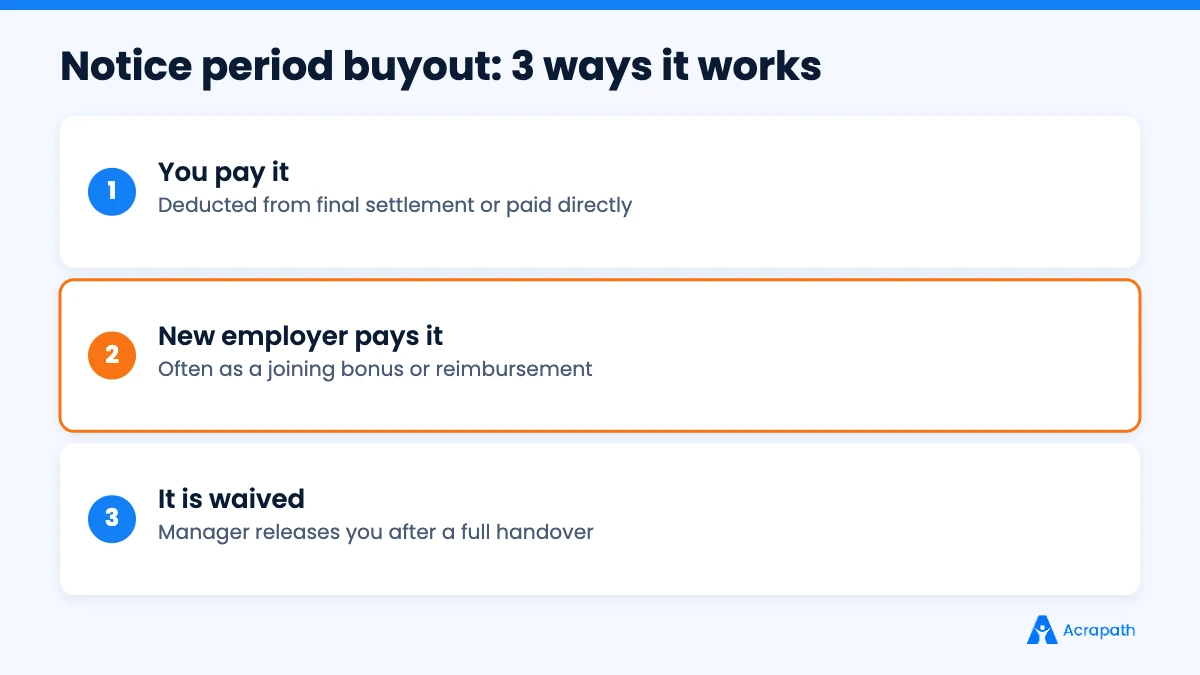
There are three common ways it happens:
You pay it. The amount is deducted from your full and final settlement, or you pay it directly.
Your new employer pays it. Many companies reimburse a buyout, often as a joining bonus. Ask before you accept. Our guide on how to negotiate salary includes a script for this.
It is waived. Your manager agrees to release you early without payment, usually after a proper handover.
Simple example: your monthly salary is ₹60,000 and your notice is 90 days. You serve 45 days and want to leave. If your company calculates buyout on a 30-day month, the remaining 45 days cost roughly ₹90,000. Check your company's policy for the exact formula, since some use basic salary only.
How to Shorten Your Notice Period
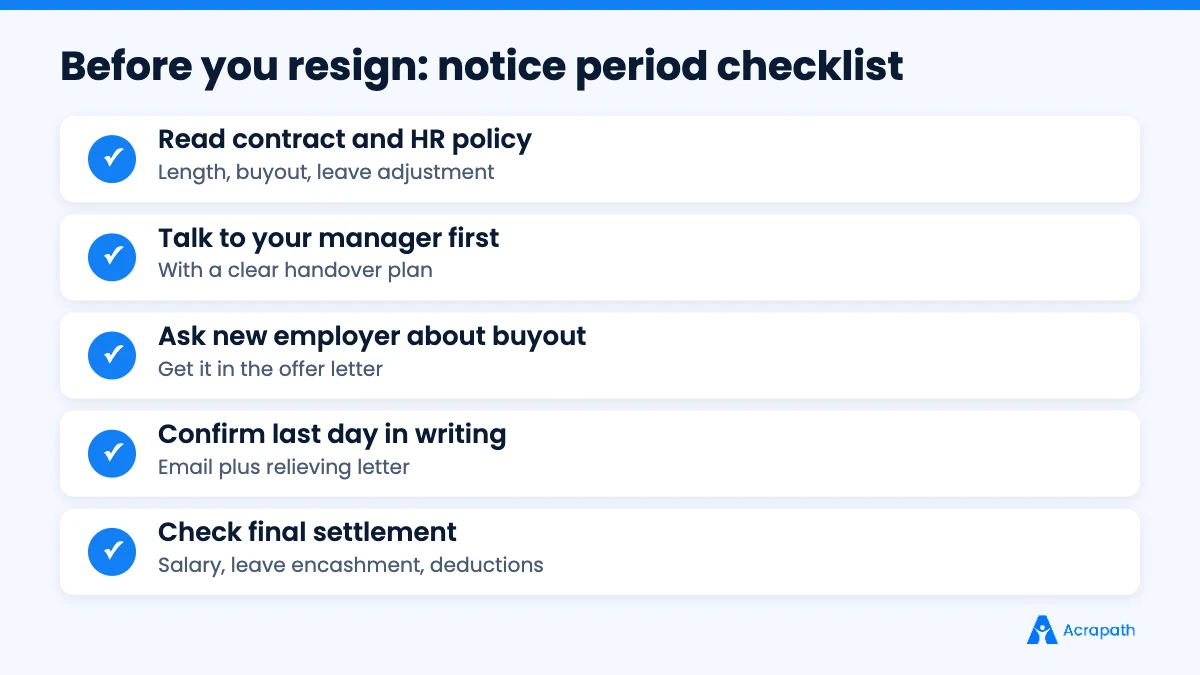
Step 1: Read your contract and HR policy
Find the notice length, whether buyout is allowed, how it's calculated and whether leave can be adjusted.
Step 2: Speak to your manager before HR
Explain your joining date, offer a clear handover plan and ask whether an earlier release is possible. Managers often agree when they see the work will be covered.
Step 3: Offer a strong handover
Document your tasks, train a colleague, and share passwords and files through proper channels. A smooth handover is your best argument for early release.
Step 4: Ask about adjusting leave
Some companies let you set off earned leave against notice days. Policies vary, so ask HR.
Step 5: Use a buyout
If release isn't possible, ask whether buyout is allowed and whether your new employer will cover it.
Step 6: Get everything in writing
Ask for your last working day, buyout amount and any waiver confirmed by email, and later in your relieving letter.
What Happens If You Don't Serve Your Notice?
Leaving without serving notice or settling a buyout, often called absconding, can have real consequences:
Your employer may recover the notice amount from your final dues.
You may not receive a relieving or experience letter, which many employers ask for.
Background verification at your new company may flag it.
In some cases, the employer may take legal action under the contract.
It's almost always better to negotiate a release than to simply stop turning up.
Notice Period and Your Final Settlement
Once you leave, your employer pays your full and final settlement: salary to your last day, encashment of leave where policy allows, and any reimbursements, minus deductions such as an unpaid buyout. In India, the Code on Wages, in force since November 2025, requires wages due on resignation or termination to be paid within two working days. Gratuity follows its own rules and timeline. Check the latest rules for your state and situation.
Tips Before You Resign
Check your notice period before you interview, so you can share an honest joining date.
Ask new employers early whether they reimburse buyouts.
Keep your resignation polite and simple. You may need references later.
Compare offers on in-hand pay, not CTC alone. See CTC vs in-hand salary.
Conclusion
Your notice period is a contract term, not a trap. Read your contract, talk to your manager early, offer a solid handover and use a buyout or leave adjustment if you need to leave sooner. Get every agreement in writing so your relieving letter and final settlement go smoothly.
Planning your next move? Find your next role with Acrapath and filter for companies that suit your joining timeline.
- #notice period
- #notice period buyout
- #resignation
- #job switch
- #employment rules
Frequently asked questions
What is the normal notice period in India?
In Indian private-sector jobs, 30, 60 or 90 days is common, depending on company policy, role and seniority. Probation periods usually carry a shorter notice. Your offer letter or employment contract states the exact period that applies to you.
How is notice period buyout calculated?
Usually as your salary for the notice days you don't serve. Some companies use gross monthly salary and others only basic pay, and they may divide by 30 or by working days. Check your HR policy, then confirm the exact amount in writing before you agree.
Can I leave without serving my notice period?
You can resign, but leaving without serving notice or settling a buyout can lead to deductions from your final dues, no relieving letter, problems in background verification and possible legal action under your contract. Negotiating an early release is a safer route.
Can my notice period be adjusted against leave?
Sometimes. Some employers allow earned leave to be set off against notice days, while others encash leave separately and require you to serve the full notice. It depends on your company policy, so ask HR before you resign.
Will my new employer pay my notice period buyout?
Many employers do, especially when they need you to join quickly. It may be paid as a joining bonus or a reimbursement. Ask during the offer stage and make sure the commitment appears in your offer letter.