Case Study: How an NBFC Built a KYC and AML Compliance Team

Acrapath Team

An illustrative case study of a growing NBFC that needed KYC analysts, AML transaction reviewers and a compliance manager, and how a clear role ladder, practical assessments and structured onboarding helped it build the team.
- Client
- Illustrative scenario: a growing lending NBFC
- Industry
- Banking & Financial Services (NBFC)
Key results
- Role ladder from analyst to compliance head
- Practical KYC and transaction-review test
- Structured training for new compliance hires
Note: This is an illustrative case study. The NBFC is a composite scenario shared to demonstrate a practical approach to building a compliance team.
The situation
A lending NBFC was growing its customer base quickly through digital channels. KYC checks and transaction monitoring were handled by an overstretched operations team, and the company needed a dedicated compliance function to keep pace with regulatory expectations.
The challenges
No clear structure for compliance roles
Candidates with very different levels of real KYC and AML experience
A need to scale analyst headcount steadily
Competition from banks for experienced compliance managers
The approach
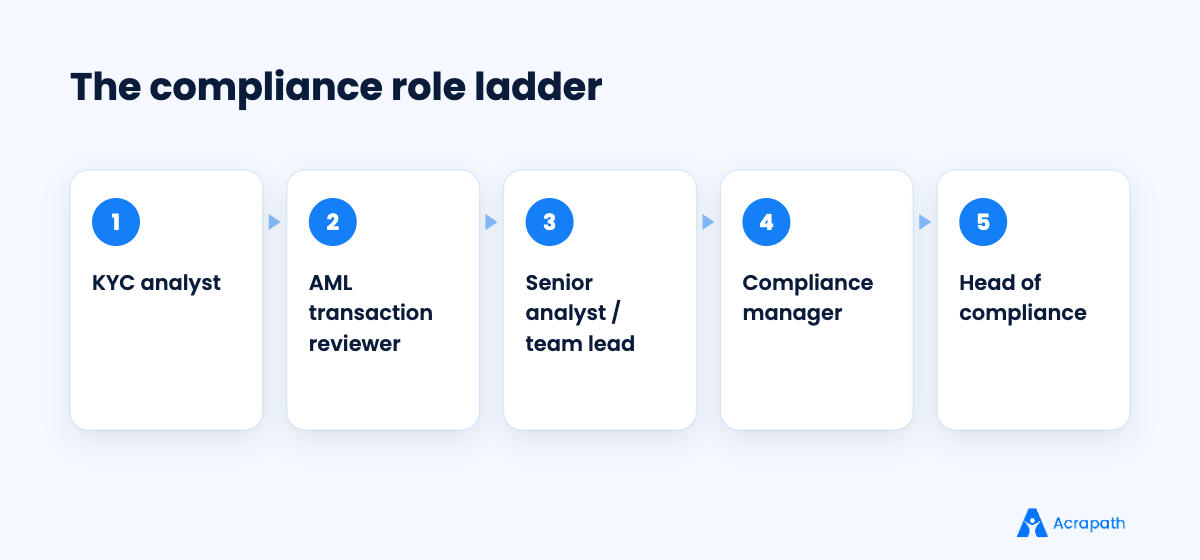
1. A clear role ladder
The company defined a role ladder so candidates could see a growth path, and so each role had distinct expectations.
2. Hiring the manager first
An experienced compliance manager from a banking background was hired first, then helped design the assessments and interviewed analysts.
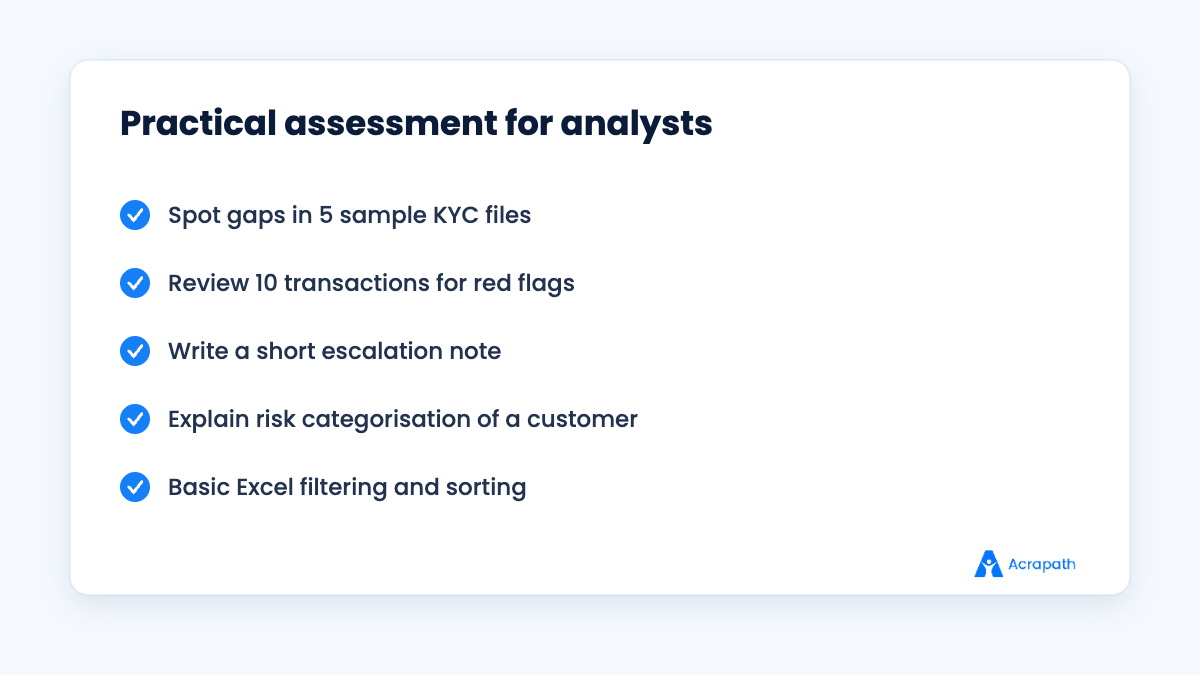
3. Practical assessments
Analyst candidates completed a short practical test based on anonymised sample files, which quickly separated real experience from resume claims.
4. Targeted sourcing
Roles were posted on Acrapath with clear descriptions of KYC and AML compliance responsibilities. The talent team also searched Talbox for candidates from banks, payment companies and other NBFCs, and considered commerce graduates with strong attention to detail for entry-level analyst roles.
5. Structured onboarding
New hires completed training on internal policies, regulatory requirements and case escalation before handling live files, with a senior analyst reviewing their first few weeks of work.
The outcome
In this scenario, the NBFC built a compliance team with clear roles, consistent quality and a growth path that helped retain analysts.
Lessons for BFSI employers
Hire the compliance leader first and involve them in building the team.
Practical assessments reveal real KYC and AML capability.
A visible role ladder improves retention.
Train before giving access to live cases.
Building a compliance function? Post roles on Acrapath, search BFSI talent in Talbox and track every hire in a structured pipeline.
- #AML compliance hiring
- #KYC analyst jobs
- #NBFC hiring
- #compliance team
- #employer case study
- #BFSI recruitment
Frequently asked questions
What roles are in a KYC and AML compliance team?
Typical roles include KYC analysts, AML transaction reviewers, senior analysts or team leads, a compliance manager and a head of compliance.
How do you assess KYC and AML candidates?
Use practical tests with anonymised sample KYC files and transactions, asking candidates to spot gaps and red flags and write a short escalation note.
Can freshers work in AML compliance?
Yes. Commerce and finance graduates with strong attention to detail can start as KYC analysts and grow with structured training and experience.
Is this NBFC case study real?
No. It is an illustrative composite scenario designed to show a practical approach to building a compliance team.
How does Acrapath help BFSI companies hire compliance staff?
Acrapath lets you post compliance roles, search candidates from banking and financial services in Talbox and manage hiring in a customisable pipeline.


