How to Start a Career in HR: Skills, Courses and First Job Tips

Acrapath Team
Want to work in human resources? This guide explains HR roles and specialisations, the skills and courses that help, how freshers and career switchers can land their first HR job, and how HR careers grow over time.
Human resources is one of the few functions that touches every part of a business. HR professionals hire people, help them grow, keep workplaces fair and compliant, and shape company culture. If you are wondering how to start a career in HR, here is a practical roadmap.
What do HR professionals do?
HR covers the full employee lifecycle: hiring, onboarding, payroll inputs, performance management, learning and development, employee relations, policies and exits. In smaller companies, one HR person may do all of this. In larger organisations, roles are specialised.
HR specialisations to know
Talent acquisition (recruitment) – finding and hiring people.
HR operations – payroll inputs, HRMS, documentation and compliance.
HR business partner (HRBP) – supporting business leaders on people strategy.
Learning and development – training and capability building.
Compensation and benefits – pay structures and rewards.
Employee engagement and culture.
Where freshers usually start
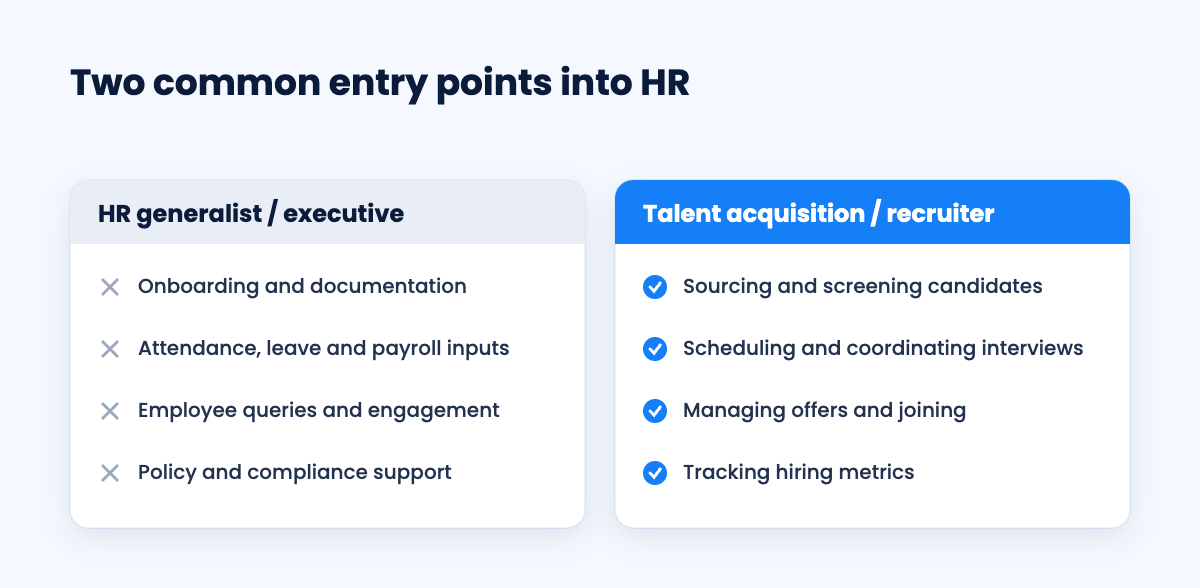
Recruitment is often the fastest way in, especially through staffing firms and recruitment agencies, where you get high-volume, hands-on experience quickly.
Skills you need for an HR career
Clear written and spoken communication
Empathy combined with objectivity
Organisation and attention to detail
Basic knowledge of labour laws and statutory compliance
Comfort with Excel, HRMS and applicant tracking systems
Confidentiality and good judgement
Courses and qualifications
An MBA or PGDM in HR is common for HRBP and management-track roles, but not essential for entry roles. Short courses in talent acquisition, HR analytics, payroll and labour law, as well as internationally recognised HR certifications, can make your profile stand out.
How to land your first HR job
Get an internship in recruitment or HR operations, even part-time.
Learn the tools: Excel, an HRMS, LinkedIn and job portals.
Write an HR-focused resume highlighting coordination, communication and any event or team management.
Prepare for HR interview questions on hiring, conflict handling and confidentiality.
Apply to recruitment agencies, startups and HR consultancies, which often hire freshers.
HR career growth
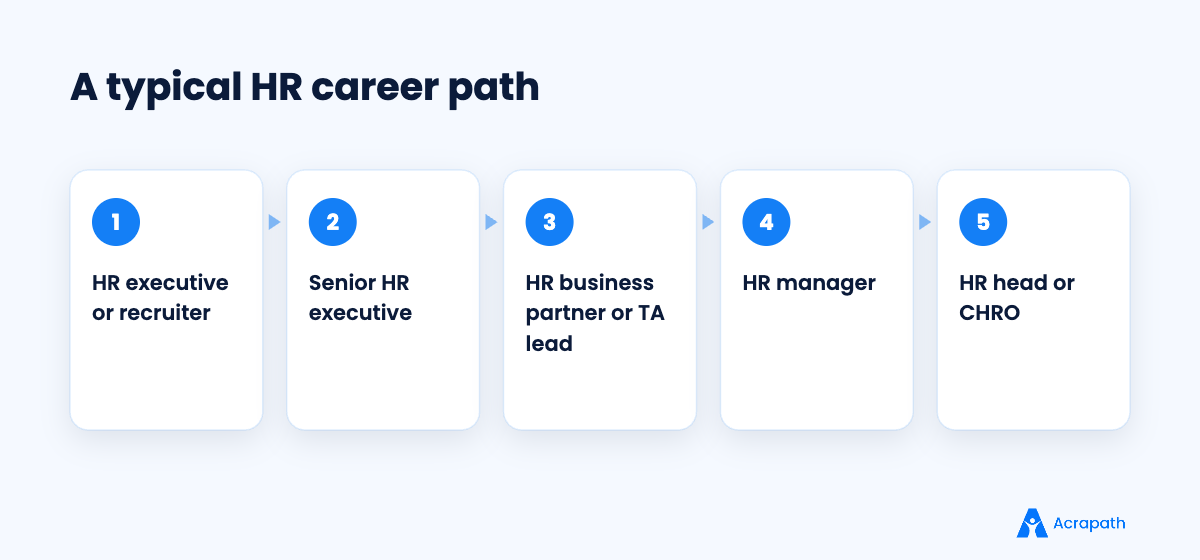
Many HR professionals also move into specialist tracks such as HR analytics, compensation, or organisational development.
Ready to begin? Find HR executive, recruiter and HR intern roles on Acrapath. Set job alerts for HR roles in your city and use Acra, our AI assistant, to discover openings that match your profile.
- #career in HR
- #HR jobs for freshers
- #HR executive
- #talent acquisition
- #HR courses
- #human resources career
- #recruiter jobs
Frequently asked questions
How can a fresher start a career in HR?
Start with an internship or entry role in recruitment or HR operations, learn tools such as Excel and HRMS, build an HR-focused resume and apply to recruitment agencies, startups and HR consultancies.
Is an MBA necessary for an HR career?
No. An MBA in HR helps for management-track and HRBP roles, but many professionals enter HR through recruitment or HR operations roles and build skills with short courses and experience.
Which HR role is best for beginners?
Talent acquisition or recruiter roles are often the easiest entry point because they offer fast, hands-on experience. HR operations and HR executive roles are also common starting points.
What skills are important in HR?
Communication, empathy, objectivity, organisation, basic labour law knowledge, comfort with HR tools and Excel, and the ability to handle confidential information responsibly.
Where can I find HR jobs?
Acrapath lists HR executive, recruiter and HR intern roles. Create a profile, set job alerts for HR positions and let Acra recommend roles that match your skills.