Case Study: How a Manufacturing Company Hired Mechanical Engineers for a New Plant

Acrapath Team

An illustrative case study of an auto-components manufacturer that needed production, quality and maintenance engineers for a new plant, and how a backward-planned hiring calendar and practical assessments helped it staff up on time.
- Client
- Illustrative scenario: an auto-components manufacturer opening a new plant
- Industry
- Manufacturing / Automotive Components
Key results
- Hiring plan built backwards from plant start date
- Practical shop-floor assessment for every finalist
- Mix of experienced and graduate engineers onboarded
Note: This is an illustrative case study built on a composite scenario, shared to demonstrate a practical hiring approach for manufacturing employers.
The situation
An auto-components manufacturer was opening a new plant and needed production, quality and maintenance engineers before trial production began. Previous hiring had been reactive, and roles were often filled just days before they were needed.
The challenge
Many roles to fill against a fixed plant start date
Candidates' notice periods of one to three months
Resumes that looked similar but hid big differences in practical skill
A need to balance experienced engineers with graduate trainees
The approach
1. A backward-planned hiring calendar
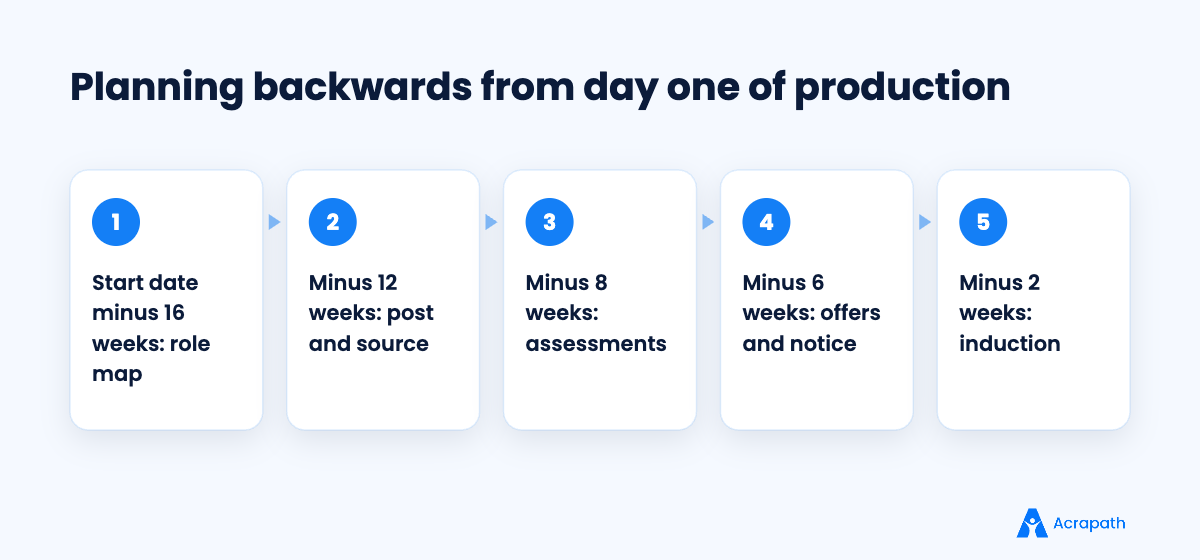
HR worked backwards from the start date, accounting for notice periods and induction time, so every role had a clear deadline for posting, assessment and offer.
2. A clear role map
Each role was defined by line, shift and responsibility, such as machining line production engineer, supplier quality engineer or maintenance engineer for CNC and hydraulics. Experienced engineers were paired with graduate engineer trainees for each line.
3. Sourcing
Roles were posted on Acrapath and the HR team searched Talbox for engineers with relevant industry experience, especially those already based near the plant location.
4. Practical assessments
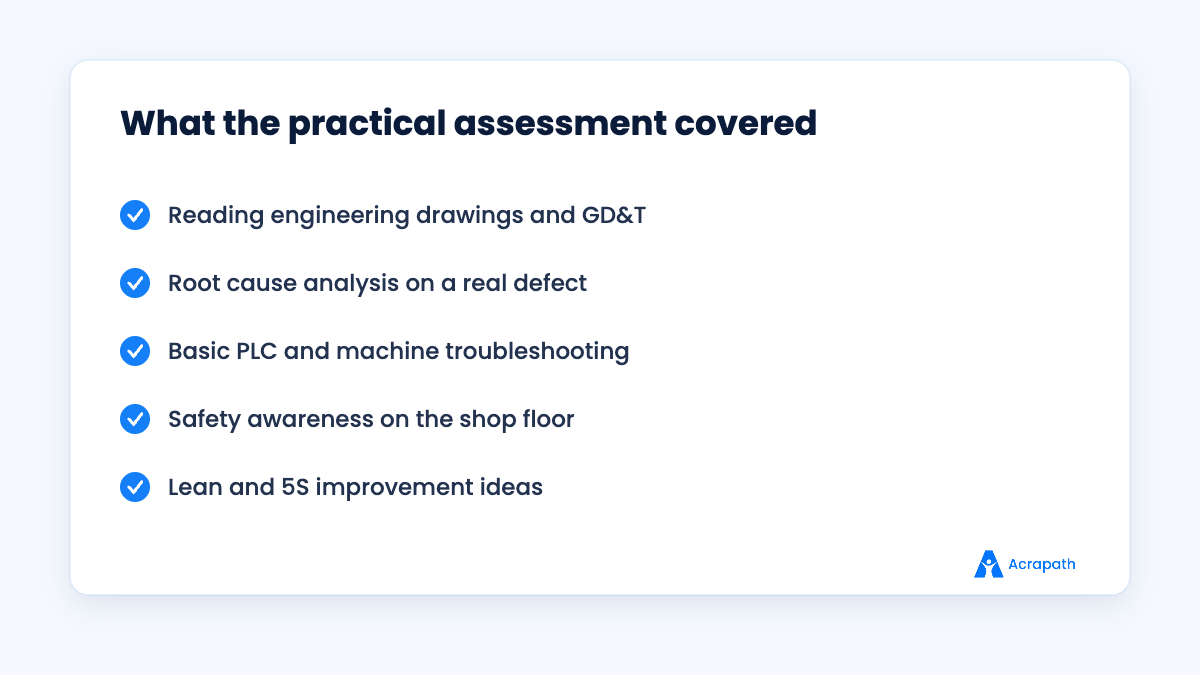
Instead of relying on interviews alone, finalists completed a practical assessment based on real plant situations.
5. Offer and joining management
Selected candidates were tracked through to joining in the Acrapath pipeline, with regular check-ins during notice periods to reduce last-minute drop-outs.
The outcome
In this scenario, the plant began trial production with engineering roles filled, and the mix of experienced engineers and trainees created a clear mentoring structure from day one.
Lessons for manufacturing employers
Plan hiring backwards from your start date, including notice periods.
Practical assessments reveal skills that resumes do not.
Pair experienced engineers with graduate trainees.
Stay in touch with selected candidates until they join.
Staffing a new facility? Post engineering roles on Acrapath, search Talbox for local talent and track every candidate from application to joining date.
- #hiring mechanical engineers
- #manufacturing hiring
- #plant staffing
- #engineering recruitment
- #employer case study
- #graduate engineer trainee
Frequently asked questions
How early should a manufacturer start hiring for a new plant?
Start around three to four months before the production start date, so you have time for sourcing, assessments, offers, notice periods and induction.
What should a practical assessment for mechanical engineers include?
Useful areas include reading engineering drawings, root cause analysis on a real defect, basic machine and PLC troubleshooting, safety awareness and lean or 5S improvement ideas.
How can manufacturers reduce offer drop-outs?
Stay in regular contact during the notice period, share joining details early, involve the future manager in check-ins and keep a backup shortlist for critical roles.
Is this manufacturing case study about a real company?
No. It is an illustrative composite scenario, shared to show a practical hiring approach for new plant staffing.
How does Acrapath help manufacturing companies hire engineers?
Acrapath lets you post engineering roles, search candidate profiles in Talbox by skills and location, and track candidates from application to joining in a customisable pipeline.


