Case Study: From Engineer to Management Consultant

Acrapath Team

An illustrative case study of a mechanical engineer with three years of plant experience who moved into an operations consulting role by reframing engineering work as business impact, practising cases and targeting industry-focused practices.
- Client
- Illustrative scenario: a mechanical engineer with three years in manufacturing
- Industry
- Consulting / Manufacturing
Key results
- Engineering work reframed as business impact
- 40 practice cases over 8 weeks
- Joined an operations consulting practice
Note: This is an illustrative case study, a composite scenario based on common career transitions, not the story of a specific individual.
The starting point
A mechanical engineer had spent three years in a manufacturing plant, working on maintenance, production planning and lean initiatives. They enjoyed problem-solving but wanted broader business exposure. Management consulting, especially operations consulting, looked like a natural fit.
The challenge
A resume written in technical language
No formal business education
No experience with case interviews
Uncertainty about which firms hire engineers
The approach
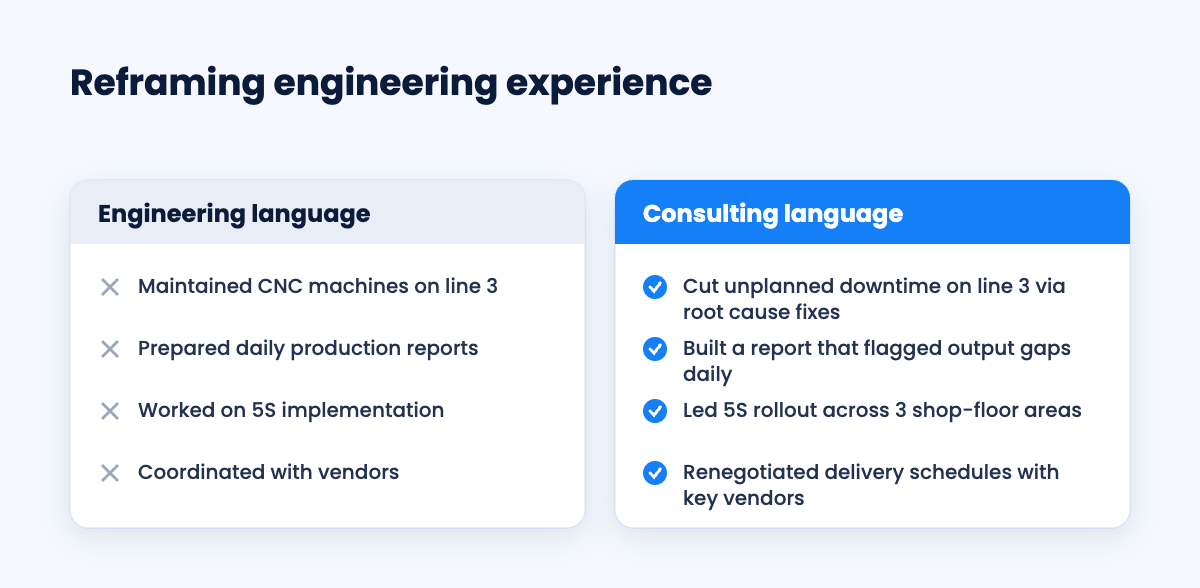
1. Reframing engineering work as business impact
The biggest change was in how the experience was described. Every bullet was rewritten to show the business result.
2. Learning business fundamentals
Short courses and reading covered profit and loss basics, unit economics, pricing and strategy concepts, enough to discuss business problems confidently.
3. Structured case preparation
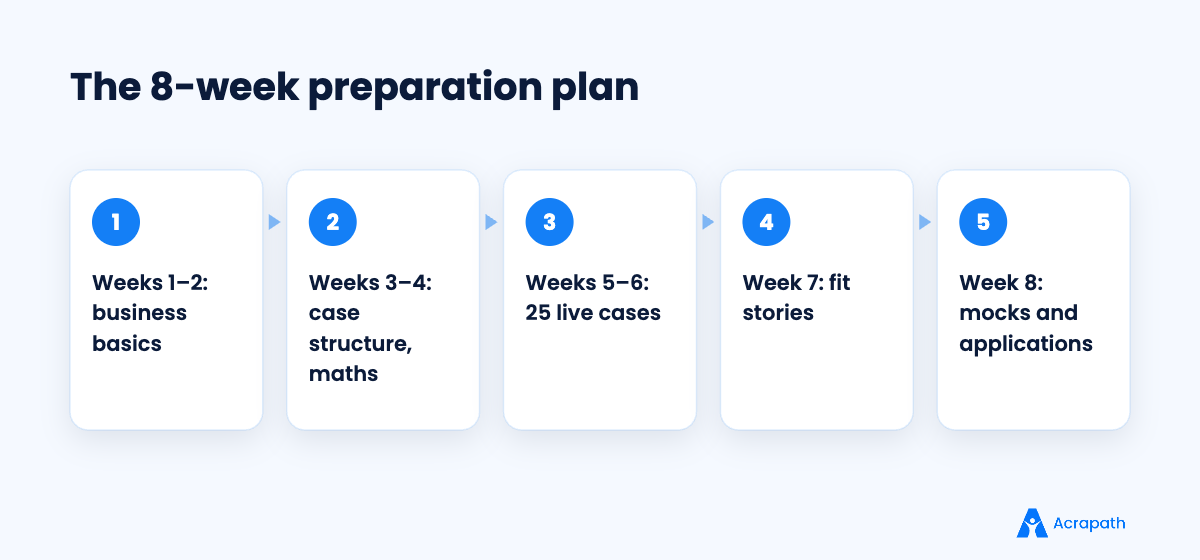
Over eight weeks, the engineer practised around 40 cases with partners, focusing on operations and profitability cases where manufacturing experience gave an edge.
4. Targeting the right practices
Instead of only applying to generalist strategy roles, the search focused on operations, supply chain and manufacturing practices at consulting firms, plus internal strategy teams at industrial companies. Job alerts on Acrapath tracked consultant and business analyst roles in these areas.
The outcome
In this scenario, the engineer joined the operations practice of a consulting firm as a consultant. In interviews, real shop-floor stories about root-cause analysis and lean implementation made fit answers memorable and credible.
Takeaways for engineers
Translate technical work into business results.
Learn enough business fundamentals to speak the language.
Use your industry depth: target operations and sector practices.
Practise cases consistently with partners.
Thinking about consulting? Update your Acrapath profile with impact-focused achievements and set alerts for consulting roles.
- #engineer to consultant
- #consulting career switch
- #operations consulting
- #management consulting career
- #consulting case study
- #career change
Frequently asked questions
Can an engineer become a management consultant?
Yes. Engineers bring structured problem solving and quantitative skills. Reframing experience as business impact and preparing for case interviews makes the transition achievable.
Which consulting roles suit engineers best?
Operations, supply chain, manufacturing, energy and technology practices value engineering experience, as do internal strategy teams at industrial companies.
Do engineers need an MBA to enter consulting?
Not always. Experienced engineers can join industry-focused practices directly. An MBA can help for generalist strategy roles or bigger career shifts.
Is this consulting case study about a real person?
No. It is an illustrative composite scenario based on common career transitions, shared to show a practical path.
Where can engineers find consulting jobs?
Acrapath lists consultant, business analyst and strategy roles. Set job alerts for operations and consulting positions.


